Evidence or Estimate: A 60-Day R&D Documentation Review for UK Boards

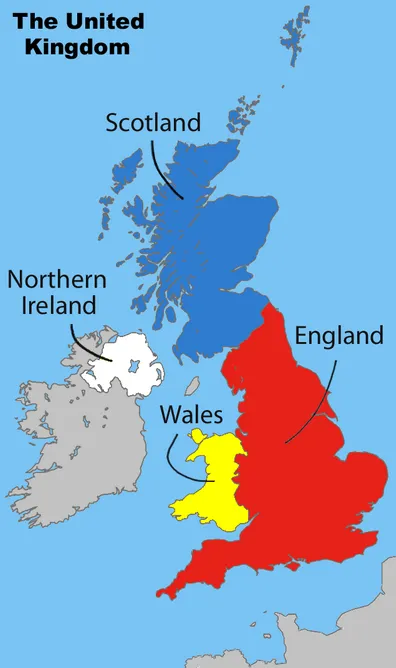
Photo: Foreign and Commonwealth Office, OGL v1.0, via Wikimedia Commons
R&D tax relief is frequently treated as a calculation to be completed after the year-end, once the accounts are drafted and the corporation tax return is being prepared. That approach can produce a defensible number on paper while leaving the underlying evidence thin. The claim may be technically allowable, but if the file cannot reconstruct what was done, by whom, when and why, the board is relying on an estimate rather than an evidenced position.
As of November 2026, UK mid-market boards have a practical window to test that position before the 2027 enquiry cycle puts greater pressure on documentation. A 60-day review is not a substitute for specialist tax advice. It is a governance exercise: establish whether the claim can be supported from contemporaneous records, identify gaps while there is still time to remediate them, and give the board a clear basis for deciding whether to proceed, adjust or pause.
Why the claim and the file diverge
The divergence usually begins with good intentions. Technical teams describe ambitious development work. Finance teams translate that work into qualifying expenditure. Advisers prepare a report. Each step adds useful information, but none necessarily produces a single evidence trail that a third party can follow without oral explanation.
HMRC enquiries tend to expose three weaknesses. First, project narratives are written retrospectively and use language that sounds like R&D but does not identify the technological uncertainty, the work undertaken to resolve it, or the outcome. Second, time records are estimates presented as facts. Third, subcontractor and externally provided worker costs are included without contracts, statements of work or evidence that the activity was directly relevant to the claim.
The Additional Information Form has raised the standard of what must be submitted with a claim. It has not removed the need for the underlying file. A board should therefore ask a simple question: if the claim were reviewed in 2027 by someone with no prior knowledge of the project, could they reach the same conclusion from the documents alone?
Days 1-10: Scope the claim and appoint an evidence owner
The first ten days should establish scope, not produce a polished report. The finance director or CFO should appoint an evidence owner with authority across finance, technical and commercial teams. The owner should build a claim register listing each project, the entity that incurred the cost, the accounting period, the claimed expenditure categories and the adviser or internal preparer.
The register should also record the evidence held for each project: project plans, technical notes, meeting minutes, test results, design iterations, contracts, time records, invoices and board papers. The output is a heat map. Projects with strong contemporary records can be sampled. Projects with only retrospective narratives should be prioritised for reconstruction.
The board decision point is straightforward: approve the review scope and confirm that no further claim submission will be made until the evidence position is understood.
Days 11-25: Reconstruct project narratives from records, not memory
Project narratives should be rebuilt from documents created at the time. The review team should interview technical leads, but interviews should be used to locate evidence, not to replace it. For each project, the file should answer four questions:
- What was the technological uncertainty, expressed in plain terms rather than grant language?
- What work was undertaken to resolve it, including failed attempts and iterations?
- Who carried out the work, and in what capacity?
- What evidence exists outside the R&D report to corroborate the narrative?
Where the narrative depends on a single retrospective document, the review should mark it as weak. Where it is supported by dated technical notes, test logs, sprint records or design reviews, it can be marked as supported. The objective is not to make every project look strong. It is to distinguish evidence from assertion before an external reviewer does.
Days 26-40: Test time, subcontractor and consumable costs
Cost testing should follow the narrative rather than sit apart from it. For staff costs, the review should trace claimed time to payroll records, timesheets, project allocation reports or contemporaneous scheduling. Estimates are not fatal, but they must be labelled as estimates and reconciled to a reasonable method. A claim that presents estimated time as exact is more exposed than one that explains its basis.
For subcontractor costs, the file should hold contracts or statements of work, invoices and evidence that the subcontracted activity was part of the qualifying project. The review should also test whether the cost was incurred by the claiming entity. For consumables and software, the connection to the project should be demonstrable, not inferred from a general ledger description.
At this stage the board should receive a exceptions schedule: the value of expenditure supported by strong evidence, the value supported only by narrative, and the value that cannot currently be supported. That schedule is more useful than a single percentage or a revised claim figure.
Days 41-50: Confirm board oversight and decision logs
R&D claims are often presented to the board as a tax benefit rather than as a project portfolio. The review should test whether the board or an delegated committee received enough information to exercise oversight: which projects were approved, what budget was committed, what technical milestones were set and what happened when they were missed.
Minutes do not need to use R&D terminology. They need to show that the projects existed, were resourced and were reviewed. A decision log showing stage gates, pivots, cancellations and reallocations is particularly useful because it corroborates the narrative of uncertainty and iteration. Where oversight was informal, the review should record that finding rather than manufacture a paper trail after the event.
Days 51-60: Remediate, sample and sign off
The final ten days should convert findings into decisions. The review team should remediate what can be fixed: obtain missing contracts, replace unsupported estimates with reconciled methods, correct project descriptions, and remove expenditure that cannot be linked to qualifying activity. It should then sample the strengthened file as if preparing for an enquiry.
The board should receive a short sign-off pack containing the claim register, the evidence heat map, the exceptions schedule, the remediation log and a clear recommendation. The recommendation may be to proceed, to reduce the claim, to commission a specialist review or to pause submission pending further work. Each is a legitimate outcome of a governance review.
Decision points for the board
The board does not need to adjudicate technical tax questions. It does need to decide four things:
- Whether the evidence file is sufficient to support the claim as prepared.
- Whether any expenditure should be removed or reclassified before submission.
- Whether the company needs external specialist review before engaging with HMRC.
- Whether the current process for capturing R&D evidence should be changed for the 2027 accounting period.
The last point matters most for mid-market firms. A 60-day sprint fixes the current claim. A change to project initiation, time capture and board reporting prevents the same gap from recurring. The practical checklist is short: one claim register, one evidence owner, contemporaneous project records, reconciled time data, contracted subcontractor evidence, a board decision log and a documented sign-off. If those items are in place by the end of the sprint, the board can describe its claim as evidenced rather than estimated.